LOGISTICS · WAREHOUSING · FREIGHT · 3PL
Operational Automation & Software for Saudi Logistics Companies
Octacer helps logistics, warehousing, freight and 3PL businesses reduce manual coordination between customers, operations teams, documents and business systems.
One workflow is enough to start. Scale when it works.
The delay is rarely the freight. It is the coordination around it.
A shipment moves in hours. The work around it — confirming, updating, filing, matching, invoicing — is what stretches across days and across people.
- Customer communication
- Manual status enquiries, WhatsApp updates and email chasing, answered one at a time by whoever is free.
- Operational handoffs
- Order → operations → warehouse → transport → customer, with each handover confirmed by a person.
- Documents
- PODs, invoices, shipment documents and customer paperwork, filed and matched by hand.
- Systems
- TMS, WMS, ERP, CRM, email and Excel, each holding part of the truth and none of them talking.
- Visibility
- Management reporting, exceptions and SLA visibility assembled after the fact instead of emerging from the work.
Octacer does not sell a TMS or a WMS. We connect the ones you already run, and remove the manual work sitting between them.
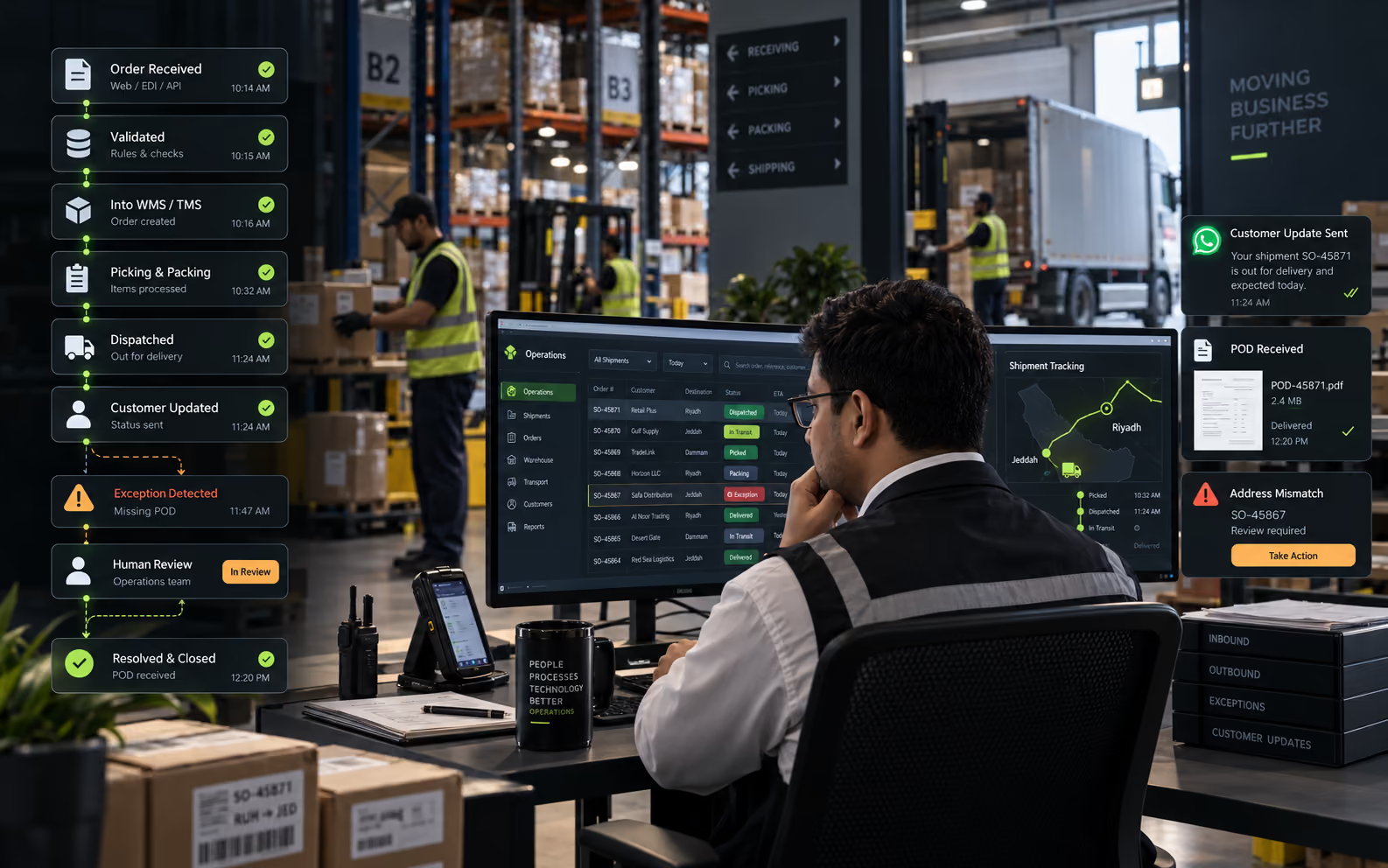
One order, from intake to invoice, without a person in the middle.
This is the path a single consignment takes when the coordination is built rather than performed. The branch matters as much as the line: a workflow with no failure route is a demo.
The order arrives however the customer sends it
Email, a portal submission, an EDI feed or a message. The intake is the same workflow regardless, so nobody is deciding which inbox owns which customer.
It is validated before it becomes work
Account, addresses, rates and required fields are checked at the point of entry. A malformed order stops here instead of failing three steps later, when somebody has already touched it.
It is written once, to the system of record
ERP, TMS and WMS receive the same order from one place. This is the step that removes re-keying, and with it the class of problem where two systems disagree about the same consignment.
Execution reports itself
Picking, loading and transport update the record as they happen. Nobody is asked for a status, because the status is a consequence of the work rather than a separate task.
The customer hears from the record
Updates are sent from the same state the operation runs on, so what the customer is told and what actually happened cannot drift apart.
The document is captured and matched
Proof of delivery is read, checked against the consignment and attached. A missing or mismatched POD is where the branch fires — it goes to a named owner and rejoins the same path.
Invoicing follows a completed job
Billing and reporting are triggered by the work being finished, not by someone remembering. The month-end reconciliation gets shorter because there is less to reconcile.

The systems one logistics workflow usually crosses
- TMS
- WMS
- ERP
- CRM
- Customer portals
- Carrier and vendor APIs
- Excel and Google Sheets
- Finance and invoicing
We integrate what you already run. Where a system has no usable API, we work with the exports, mailboxes and file drops it does have.
Ten workflows logistics businesses bring us first.
Each one is a candidate, not a package. Which is worth building — and whether it needs automation, integration, AI or nothing new at all — is what the review decides.
Shipment Status Automation
Status answered from the system of record instead of a person checking a screen and typing a reply.
ExplorePOD Processing
Proofs of delivery captured, read, matched to the job and filed without manual sorting.
ExploreCustomer Onboarding
A new account set up once and created consistently in every system that needs to know about it.
ExploreCarrier / Vendor Onboarding
Documents, rates and compliance details collected and checked before the first job is assigned.
ExploreOrder Intake
Orders arriving by email, portal or message turned into validated records with the gaps flagged.
ExploreBilling & Invoice Workflows
Invoicing triggered by completed jobs and their documents, rather than by a month-end chase.
ExploreManagement Reporting
Operational reporting assembled from the systems themselves, on a schedule, without a weekly rebuild.
ExploreException Management
Exceptions detected, routed to an owner and tracked until they are actually closed.
ExploreERP / WMS / TMS Integration
One record moving between systems instead of being re-keyed into each of them in turn.
ExploreCustomer Portals
A place customers can check their own shipments, documents and history instead of asking.
Explore
Systems that already do this work.
Not logistics case studies for their own sake — the three architectures a logistics operation would recognise: documents, connected systems and visibility.
- Representative architecture
AI Document Processing
Incoming documents read, classified and turned into structured records, with anything the model is unsure about routed to a person before it reaches a system of record. The POD problem, solved as a governed workflow.
- Documents
- Governed AI
- Representative architecture
Lead-to-Cash Automation Across Four Platforms
Four platforms joined into one traced path, so a record moves from enquiry to signed and paid without being re-keyed. The same integration problem an order-to-invoice flow has.
- Integration
- Order to invoice
- Octacer internal system
Company Operating System
One internal surface over work that lives in several systems, built and operated by Octacer — which is what operational visibility across a TMS, a WMS and an ERP actually requires.
- Visibility
- Operational platform
Show us one logistics workflow.
The slowest one, or the one that generates the most messages. We map it, name the constraint and tell you whether automation, integration, AI or custom software is the right first move — or whether the answer is no new software.