MANUFACTURING · ENGINEERING · SUPPLIERS · QUALITY
Automation & Operational Software for Saudi Manufacturing
Improve the processes surrounding your ERP, plant, engineering team, suppliers and customers without forcing the business into another disconnected application.
Bring one manufacturing workflow. We will tell you what it needs.
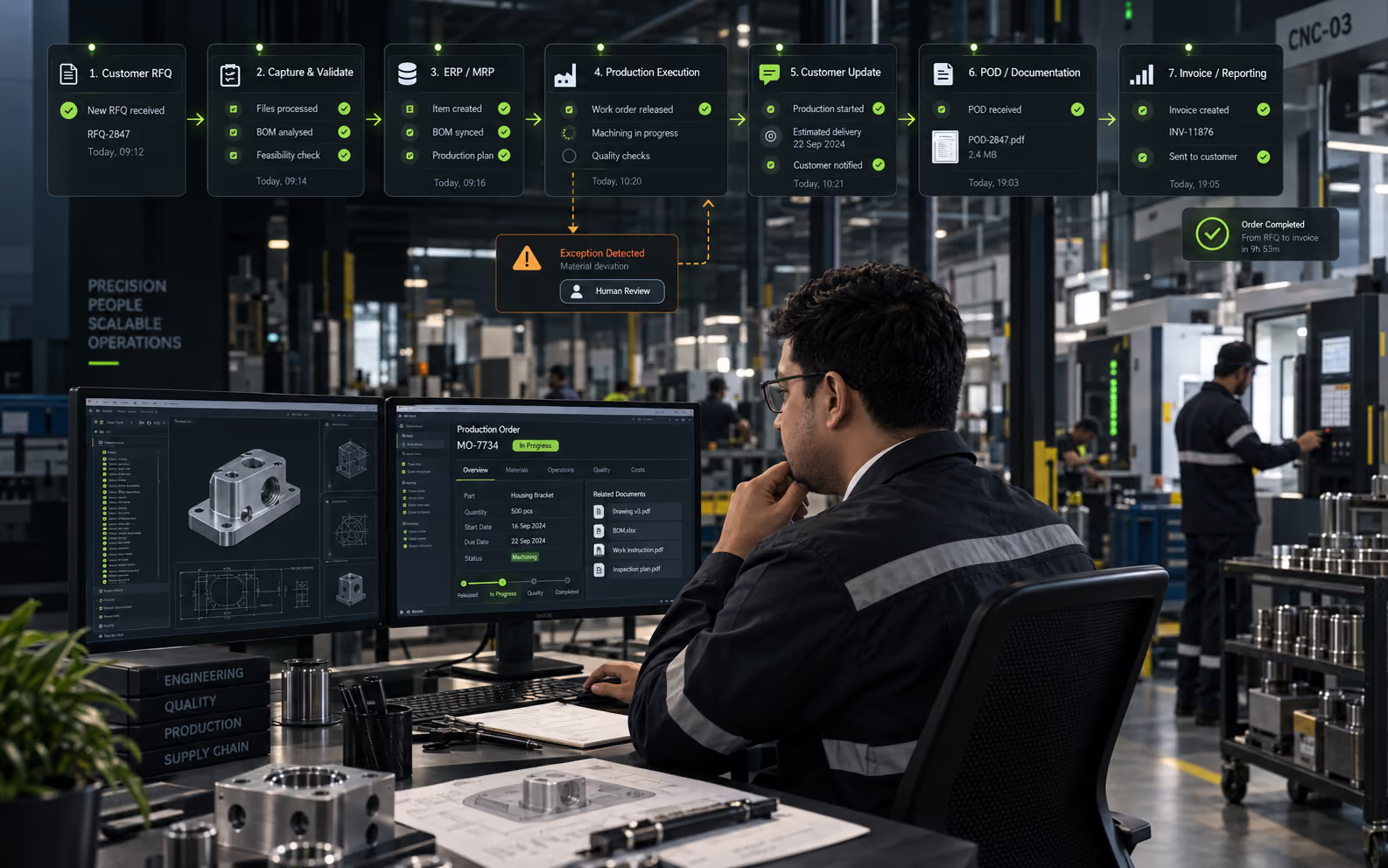
The ERP is usually fine. The work around it is where the days go.
Eleven areas where manufacturers lose time to email, spreadsheets and follow-up. None of them requires replacing the system you run production on.
RFQ intake
Enquiries arriving as email and attachments, captured as structured requirements instead of a thread.
ExploreQuotation workflows
Costing, revisions and approvals moving on a tracked path rather than between spreadsheet versions.
ExploreProcurement and supplier management
Requests, quotes, documents and supplier records in one place, with the chasing handled for you.
ExploreInventory synchronisation
Stock positions kept consistent between the ERP and whatever else needs to know them.
ExploreProduction visibility
Job status readable by the commercial office without a walk to the floor or a phone call.
ExploreQuality documentation
Inspection records, certificates and traceability captured as the work happens, not reassembled later.
ExploreMaintenance workflows
Requests, schedules and completion evidence tracked against the asset rather than in a notebook.
ExploreEngineering approvals
Drawings and changes reviewed by named people, with the decision and its version recorded.
ExploreDispatch
Shipping paperwork, customer notification and the ERP update triggered by one completed job.
ExploreCustomer service
Order status, documents and history answerable from the record instead of from someone’s memory.
ExploreManagement reporting
Operational reporting assembled from the systems themselves, on a schedule that does not need a person.
Explore
From customer RFQ back to the customer, in ten stages.
Read it once against your own operation. The question is not whether you have these stages — you do — but which of them still run on Excel, email and manual follow-up.
The enquiry arrives as whatever the customer had to hand
An email with a drawing attached, a portal submission, or a call written up afterwards. It becomes a structured requirement at the point of arrival, so the estimator is not the person reconstructing what was actually asked for.
The drawing becomes part of the record, not an attachment
CAD files, specifications and tolerances attach to the enquiry itself and version with it. Nobody searches a mailbox to work out which revision the quote was priced against.
A person still decides whether you can make it
Manufacturability is judgement and it stays with engineering. What changes is that the review arrives with everything it needs already assembled, and the verdict is recorded against the enquiry instead of sent back as a reply.
The price is assembled rather than remembered
Material, process routing and lead time are derived from the same inputs every time, so two estimators pricing the same part do not produce two numbers. A revision becomes a version of one quote instead of a new spreadsheet.
Approval is a recorded decision with a name on it
Who approved, which version they approved and when are captured as the approval happens. Nobody reconstructs that chain later from a forwarded email thread.
It is entered once, into the system you already run
The approved quote becomes the order in the ERP without being re-keyed. This is the step that removes the class of problem where the order and the quote quietly disagree about scope or price.
The floor reports itself to the office
Job status updates as the work moves rather than when somebody is asked for it. The commercial team stops walking to the floor to answer a customer, and production stops being interrupted to answer the commercial team.
Inspection is captured against the job as it happens
Measurements, certificates and sign-offs attach to the job at the moment they are produced. Traceability stops being a document pack reassembled afterwards from paper and memory.
Paperwork, notification and the ERP update are one event
Shipping documents, the customer message and the system update are all triggered by the same completed job. There is no window where the goods have left the gate and the record has not caught up.
The customer is answered by the system that did the work
Status, documents and history are readable from the record rather than from whoever happened to handle the order. The enquiry closes where it started, with everything that happened to it attached to it.
Which steps still rely on Excel, email or manual follow-up?

Manufacturing expertise, turned into software.
The closest thing to this page’s argument that we have built: a platform that takes an incoming drawing and returns a quotation the business is willing to stand behind.
Digital Manufacturing Platform
A customer uploads a part. The platform analyses manufacturability, derives manufacturing time and cost from the geometry, produces a quotation, takes the order and payment, and carries it through to fulfilment — the quoting knowledge of the business, encoded rather than remembered.
- Custom platform
- Quotation
- Manufacturing
Company Operating System
Octacer runs its own delivery, finance, recruitment and reporting on one internal platform we built and still operate — the same problem a manufacturer has when the office needs one view of work that lives in five places.
- Operational platform
- Internal systems
Bring one manufacturing workflow.
Octacer will determine whether automation, integration, AI or custom software is the appropriate first step — and will say so if the answer is a process change and no new software.